
What Are Root Notes in Music
In this article, I explain what root notes are and what purpose they serve us musicians and composers.

In music theory, a root note, also known as the root, is the foundational note upon which a chord or scale is built.
The root note determines the overall tonal center, and gives a chord or scale its name and character.
How Many Root Notes Are There?
It can get overwhelming very quickly but you only need to know the names of the 12 semitones of a keyboard to know the root names.
In fact, as long as you know A-B-C-D-E-F-G then you have all the parts you need to learn the rest.
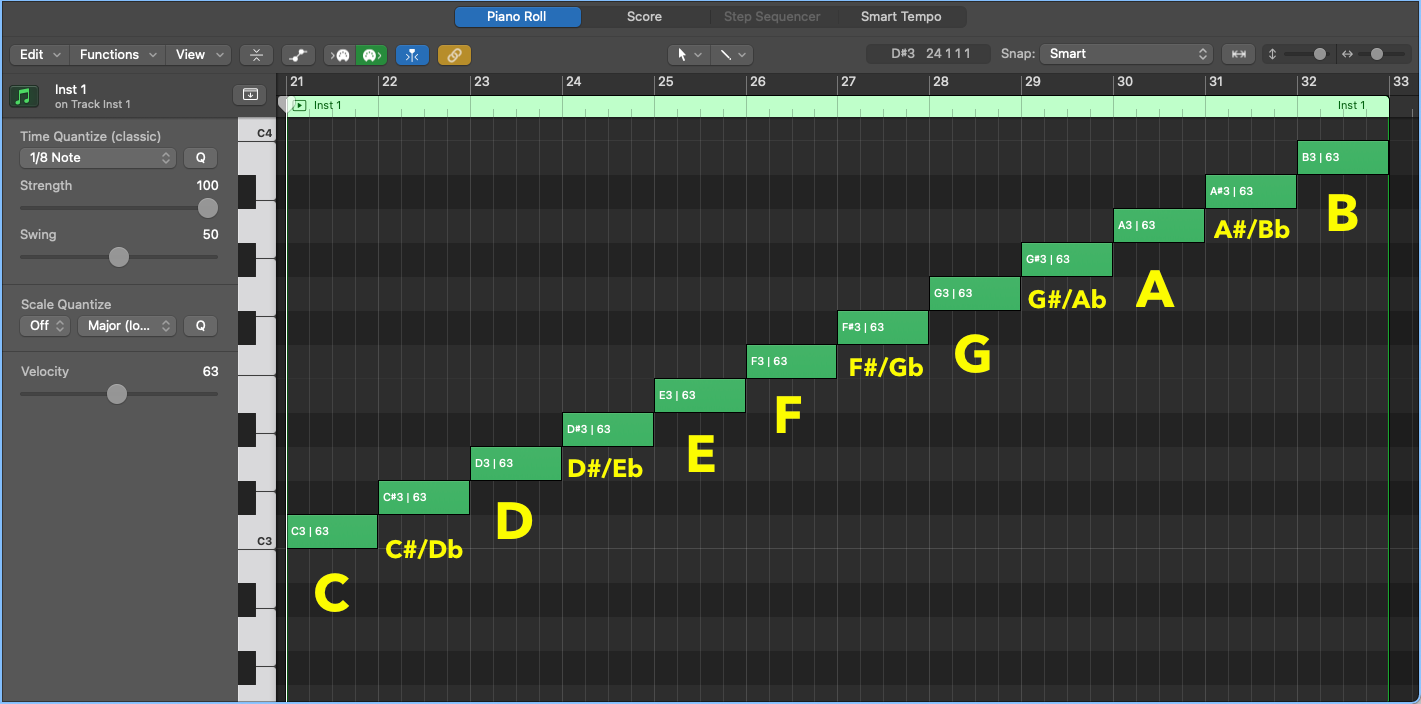
The remaining root note names are any/all of those seven letters with either a ”# (sharp)” or a “b (flat)” next to it.
For example, Ab (A flat) or C# (C sharp).
Root Notes in Chords
In the context of chords, the root note is the lowest note or the note upon which the other notes are stacked.
It defines the chord’s identity and tonal quality.
For example, in a C major chord (C-E-G), the note C is the root note. Similarly, in an A minor chord (A-C-E), the note A is the root note.
Root Notes in Scales
In scales, the root note is the starting and ending note of the scale.
The intervals between the root note and the other notes in the scale determine the scale’s structure and sound.
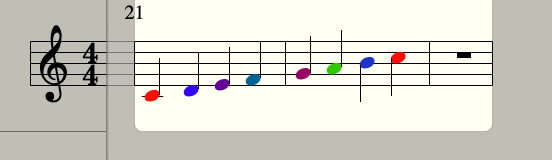
For example, in the C major scale (C-D-E-F-G-A-B-C), the note C is the root note. The intervals between C and the other notes create the major scale pattern.
Root Notes of Key Signatures
In a musical key, the root note is the central note that establishes the key’s tonal centre.
All chords and scales within that key are built around this root note.
For instance, in the key of G major, the note G is the root note. Chords and scales in this key revolve around G as the central pitch.
Root Notes in Harmony
In harmony, the root note helps identify the relationship between chords.
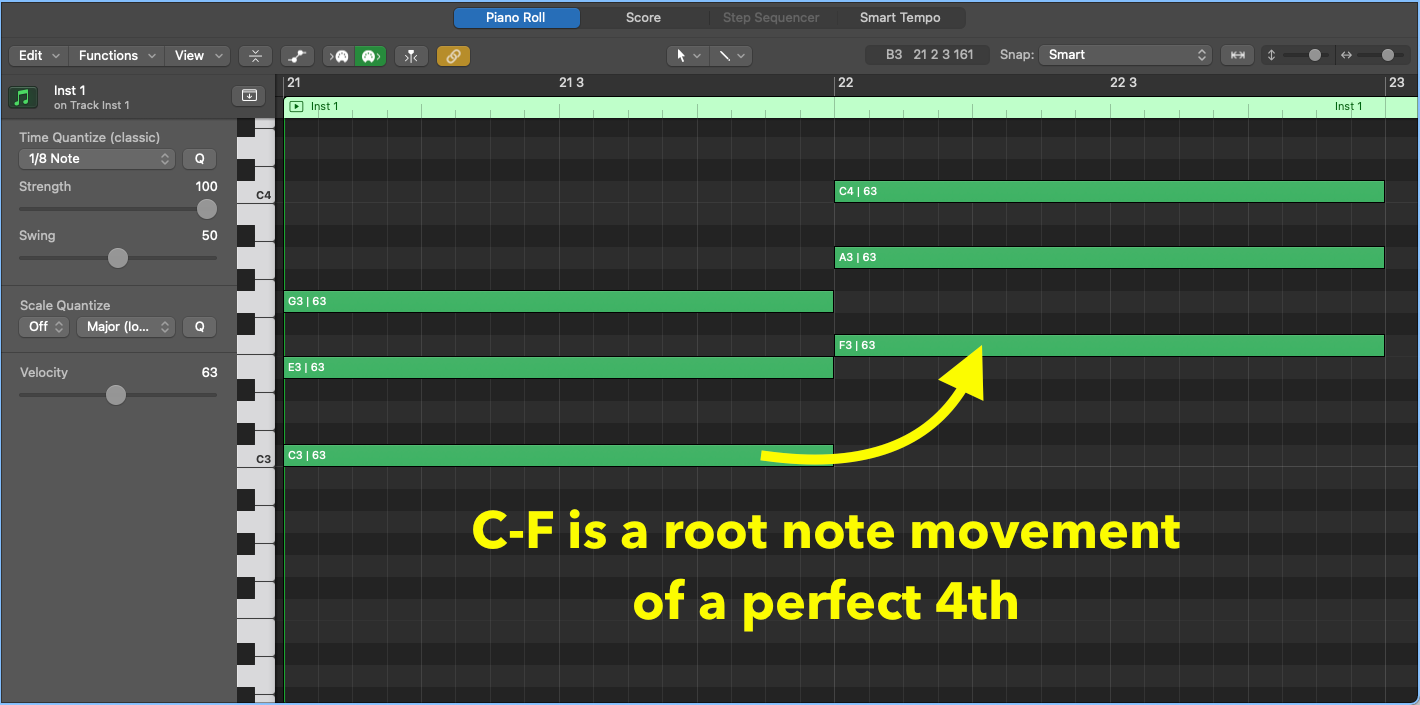
For example, a C major chord followed by an F major chord has a root movement of C to F, which is an interval of a perfect fourth.
Learning these relationships between the root movements of chords greatly improved my confidence when writing music. It meant that I knew the relationship between chords which is essential knowledge if you ask me.
Why Are Root Notes Important
Understanding root notes and how they provide the basis for chord progressions, harmonies, and melody construction is fundamental in music theory.
Root notes and their potential uses help musicians and composers establish a musical framework and create cohesive musical compositions much more easily.
Happy composing!Rich
Read next
- What is the Minor Second interval?
Pssst, it's the one you hear in Jaws
- What Is A Music Ensemble? - All You Need To Know
If you’re interested in music in general, you may want to learn the different forms in which music can be played or performed. This will help you to understand the theory of music…
- What Is A Semitone?
When learning the notes of a piano or completing your singing scales, those sneaky semi-tones can often be missed or forgotten. However, learning the pitch and the distances…
- What Are Triads?
If you’re just starting out with music theory, chances are you’ve seen the term ‘triads’ thrown around. These types of chords are incredibly common in music and play a large part…