
Trailer Music Tutorial: 'Rakasha' by Richard Pryn
In this tutorial, I give you a detailed breakdown of my track ‘Rakasha’ which was released through Elephant Music on the album ‘Vermillion’. This track has been used on trailers…
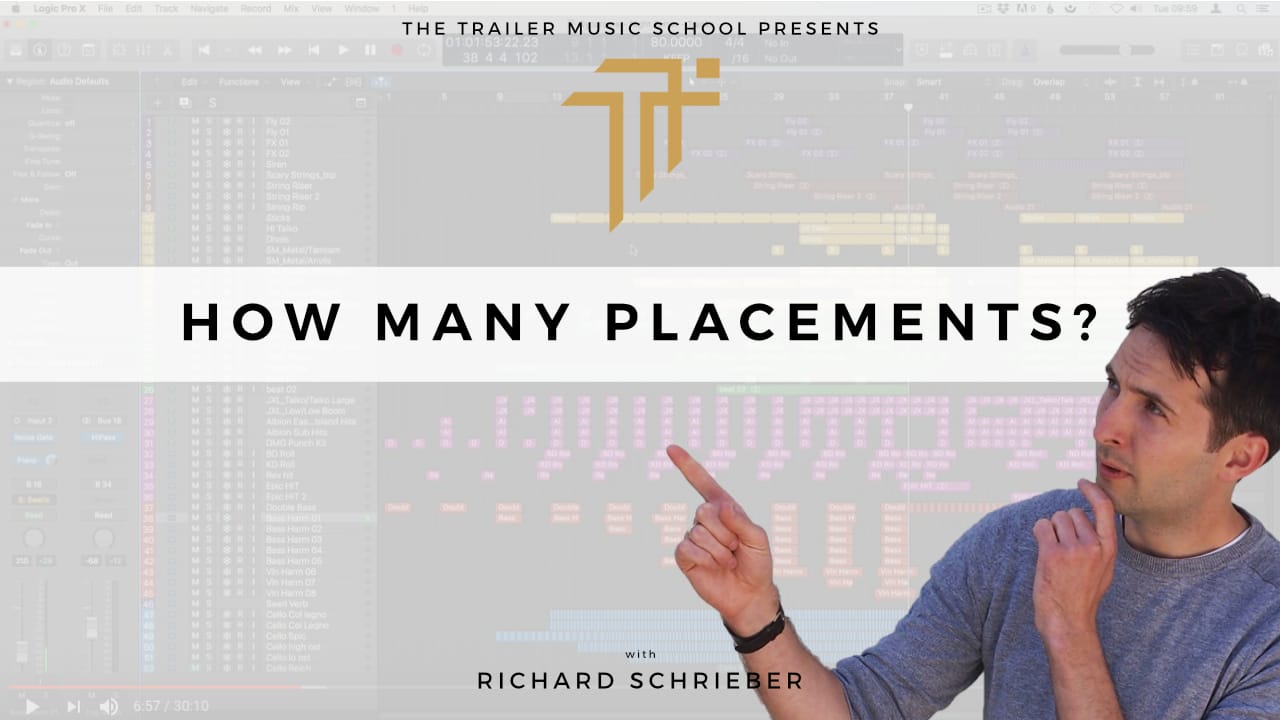
In this tutorial, I give you a detailed breakdown of my track ‘Rakasha’ which was released through Elephant Music on the album ‘Vermillion’.
This track has been used on trailers for Netflix’s Bird Box trailer and the ‘Glass’ international trailer.
I show you how I constructed the track, revealing my thought processes and also how I built the track up from its starting point.
This is one of those wonderful tracks that just grew and grew really organically.
It was originally envisaged to be just a continuous riser for 2-3 minutes but things just kept being added and added until we ended up with this wonderful cue!
How I make my own risers
Rakasha started life as a riser, so here is how I make mine. Risers are one of the quickest ways to create build, tension and anticipation, and I keep a selection saved so I can drag and drop them straight into a session.
The simplest way is pitch bend. Load up a synth, hold a note and draw a pitch bend curve in the MIDI editor. A steady curve gives you a slow, even rise, and a curve that shoots up at the end gives you more of a rip. Be aware that some instruments only bend up an octave, so check the pitch bend range.
I make lots of versions: different lengths (four, eight and sixteen bars), different textures (gritty synths, simple sine waves, strings) and different pitches. Sine waves are great for low risers. Strings give a lovely extra character. When I bounce each one I give it a number and a descriptive word, like “riser 002 mid filthy”, because once you have a lot of them you forget which ones you liked.
To layer them, I take the same riser and start copies at different points, so each one enters bigger and higher than the last. Fade them in so they aren’t too aggressive, then try some distortion, tape warmth and reverb to make the sound your own.
Context matters. A riser on its own can sound unimpressive, but put it under a low boom every four bars and a bit of melodic content and suddenly it makes sense. The riser is telling the audience that something big is about to happen.
Making your own also means no one else will have exactly the same sounds.
For more, read Risers: The Easiest Way to Create Tension in Your Music, How to create Stutter Risers and 5 Easy Ways to Create Suspense. The Trailer Music Course shows how I build risers, rips and whooshes into a sound library step by step.
Happy composing!Rich
Read next
- The honest truth about production music income in 2026 (with real numbers from my career)
Everyone talks about passive income from music. Almost nobody shows you the actual numbers.
- The YouTube Strategy That Built 700K Subscribers: How One Composer Turned Belief Into Income
Composer Greg Dombrowski reveals how he built a thriving YouTube career without relying on trends, algorithms, or optimisation hacks, just one track a week and an unwavering belief in his craft.
- The Custom Music Survival Guide: How to Beat Burnout, Time Zones, and Unfair Deadlines
I had to work all night to meet LA deadlines while juggling a day job, leading straight to burnout; here is how I learned to survive the time zone trap, set boundaries with production houses, and make custom music work on my terms.
- Composing the Enchanting Soundtrack for Pete's Dragon Trailer
Learn my approach to writing uplifting family adventure trailer music through my track "The Sun Will Rise," which was featured in Pete's Dragon and showcases the power of simple hooks, cohesive progressions, and magical orchestration.